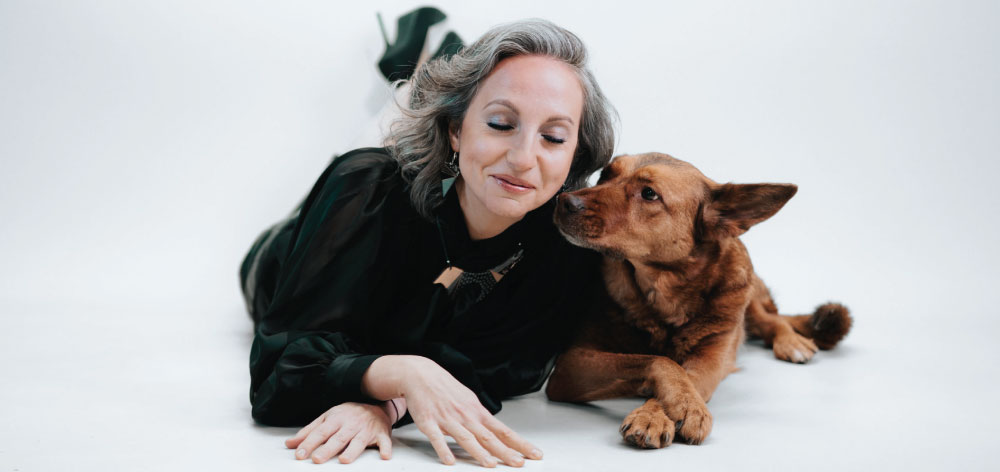
Explore the Journey of a Vegan Trailblazer
Exclusive Interview with a jazz star Jadranka Juras
Join us as we delve into the inspiring journey of a renowned vegan advocate, sharing insights and experiences that have shaped their path in promoting a plant-based lifestyle.
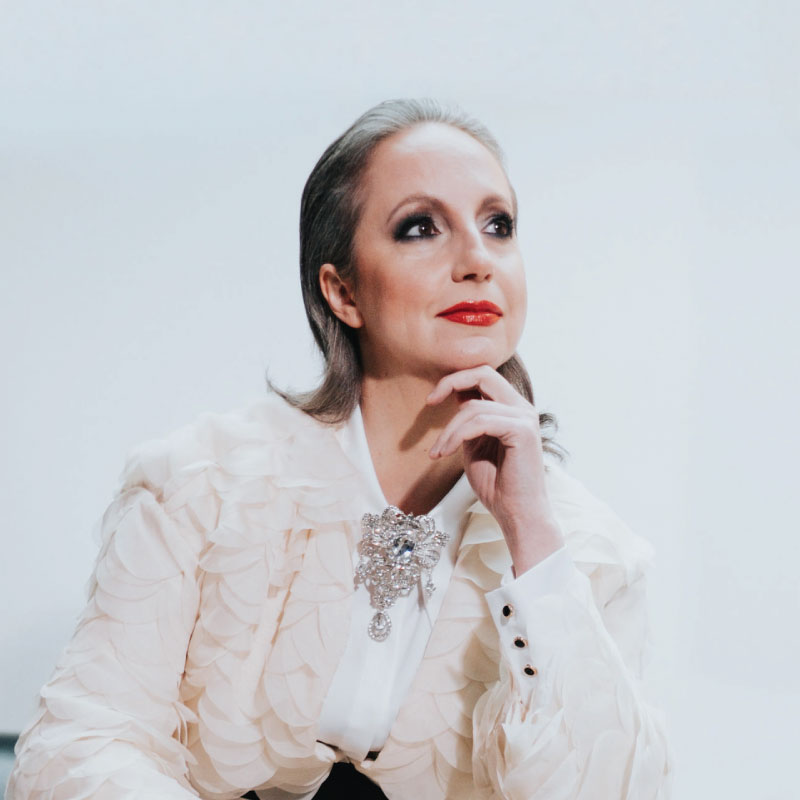
Jadranka Juras
Jadranka Juras is a versatile and celebrated Slovenian vocalist whose career masterfully bridges the worlds of pop, jazz, and classical opera. After refining her artistry with a jazz vocal degree from the University of Music and Performing Arts in Graz, she launched two acclaimed solo pop projects, Anima and Sakura, producing major radio hits. Her relentless artistic pursuit then led her to classical singing. She made a successful opera debut in 2012 and has since performed leading roles on stages like the Slovenian National Theatre and the National Moravian-Silesian Theatre in the Czech Republic. Throughout her journey, she has collaborated with Slovenia’s top musicians, performed with Laibach on a European tour, and recorded with the Slovene Philharmonic. In 2016, she returned to her jazz roots with the album Paris Honey. Jadranka Juras stands as a unique and distinguished voice in the Slovenian music scene, continuously evolving and excelling across genres. Sitting down with Slovenian artist Jadranka Juras, fresh off the release of her evocative new album “Dva črna vrana,” the conversation naturally delves into the core philosophy that guides her: a committed and thoughtful vegan lifestyle
A Dialogue with Jadranka Juras: Insights and Inspirations
Wegany: As a public figure, you are now the unintentional ambassador of this lifestyle. What is the core message you hope people take from the way you live, without you having to preach?
Veganism is a way of living that seeks, as far as is practically possible, to avoid causing harm to animals, and, of course, to people and the planet. It is a way of life where you are aware that your rights end where the rights of another begin, and the awareness that food of animal origin is not a necessity for me, but a choice. So why would I choose food for which someone suffers and is killed?
Wegany: Do you have a favorite traditional dish (e.g., štruklji, jota,…) that you have successfully “veganized”? What is the key ingredient for success?
I have veganized almost all dishes, and with today’s selection of plant-based foods, it’s truly the least of my problems.
I love štruklji, stuffed peppers, sarma, goulash, “meat” loaf, French salad… in short, there’s no dish I haven’t tackled.
Wegany: When you are very busy with rehearsals or filming, what are your favorite quick and easy vegan meals that give you enough energy to perform?
Personally, I really like pasta, which is also the quickest to prepare. Or, for example, baked polenta; stuffed peppers from the oven are also quick to make.
Wegany: Many people think veganism is very time-consuming. Is this true or a prejudice? How does veganism contribute to slowness and mindfulness in eating?
That is purely and simply a prejudice. It is true, however, that you pay a bit more attention to what you eat, which is great – eating should be more conscious and considered an event, not something you quickly throw into yourself and move on. That, after all, is the relationship you have, or don’t have, with yourself.
Wegany: What is your best “life hack” for a simple vegan life? Is it a specific kitchen gadget, a single ingredient, or a mental trick?
Why should a vegan life be simple? Life itself is not simple, and there’s nothing wrong with that. Life is extremely complex and has so many different dimensions that I think it wouldn’t hurt us to become aware of at least some of them. To live in the moment, to be present, to be aware of what is happening, what relationships are like, what we are doing, etc.
Wegany: How do you navigate visits to family or friends where traditional cuisine is often very meat and animal product-focused? Do you ever feel uncomfortable or do you have to prepare specially?
In my family, it’s not a problem at all, as my sister has also been vegan for many years. Sometimes I’m a bit surprised when an acquaintance my age or even younger has a problem figuring out what to serve me, since nowadays veganism is something that is part of everyday life. Recently, for example, I was in Serbia, and at every visit they prepared pies with various fillings for me (mushrooms, pumpkin, potato, cabbage, sour cherries, etc.). If I’m indifferent when I see people at the same table eating animal corpses – I’m not indifferent because it hurts me, because I know a sentient being died for something that most people don’t even appreciate and have no relationship with. And it’s not a necessity either, just a choice or a habit or pleasure. Is it right for someone to be exploited and killed for our “pleasure”?
Wegany: In a world often polarized by dietary choices, how do you navigate conversations about veganism with friends, family, or fans who may not share your views?
I think it’s clear to everyone what my view of the world is, and on people eating food of animal origin. And mostly, in conversation, they essentially agree and understand, but they don’t become conscious of it and continue to do as they were taught, which is of course the easiest – you simply don’t take responsibility but go along with the majority ideology.
Wegany: Your path into the public eye has been one of artistic and personal evolution. What was the specific trigger or series of moments that led you to veganism? Was it a sudden realization or a gradual awakening?
I am a person who doesn’t take things for granted, but rather questions their givenness. For me, something that “everyone” does or thinks doesn’t mean it’s right and true. I have my own head to think with, not to be on autopilot and just follow like a zombie. And every inquiry, of course, brings certain answers and revelations. I have always felt a special fondness and belonging with animals, so it was rather logical that at some point I would see the truth of what we as a society are doing to animals. And the truth was and is extremely horrifying. Especially when you know and see, and at the same time comprehend, that others don’t want to know and see. Because their belief system is too comfortable for them and they can’t be bothered with it.
Wegany: Your instrument is your voice. How has a plant-based diet affected the health, stamina, and physical demands of performing and recording?
Apparently quite well, since at almost 50 years old I am without health problems. I hope it continues that way.
Wegany: If your vegan diet were a music genre, what would it be and why? (Is it the complex harmony of a well-balanced Buddha bowl, the soulful simplicity of a classic bean stew, or the innovative fusion of modern plant-based cuisine?)
The soulful simplicity of a classic bean stew. Suite No. 3 in D major by Johann Sebastian Bach.
Wegany: How would you convince someone to become vegan?
I have no intention of convincing anyone. Everyone carries the responsibility and consequences of their own actions and words.